28/10 • 2026
WTC São Paulo
7th Experience is pleased to announce the TOP 50 Outstanding Executives in Human Resources 2026 – a program that recognizes the leaders who have stood out the most in the last 12 months for their strategic performance, organizational impact, and contribution to the evolution of the field.
The initiative honors executives who have taken on increasingly multifaceted roles at the highest levels, with performance that goes beyond traditional HR — driving innovation, engagement, and organizational culture.
Recognized professionals are selected based on recommendations from experts, industry peers, and direct applications—all with track records demonstrating concrete results, influence within the company, and leadership in the Human Resources ecosystem.
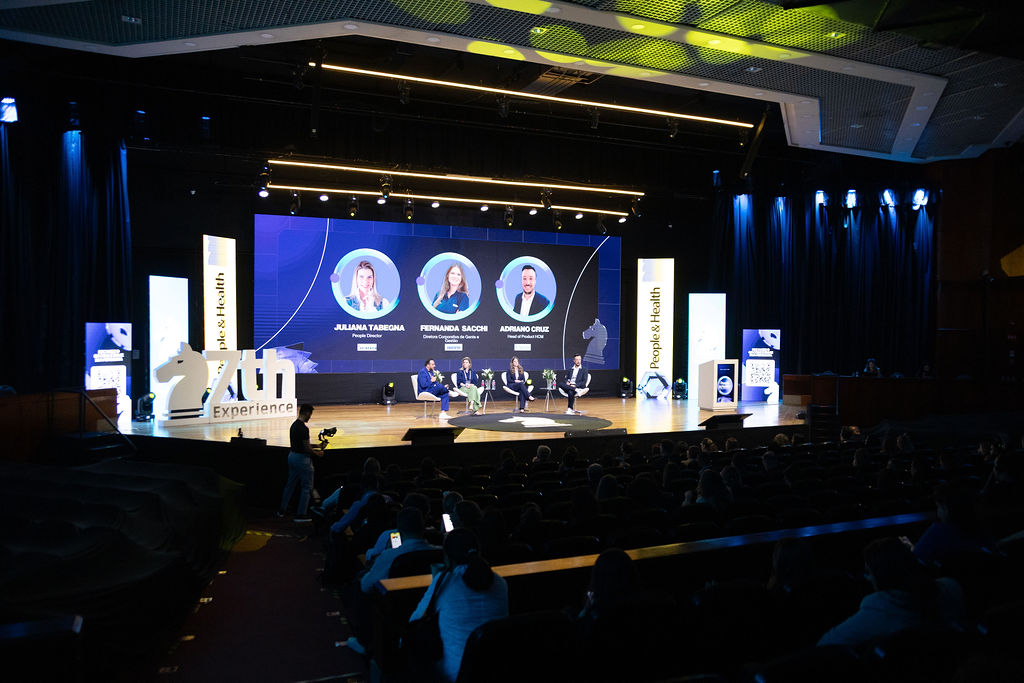
The 7th Experience curation team carefully evaluates each profile, and those selected are honored during the People & Health Executive Summit.
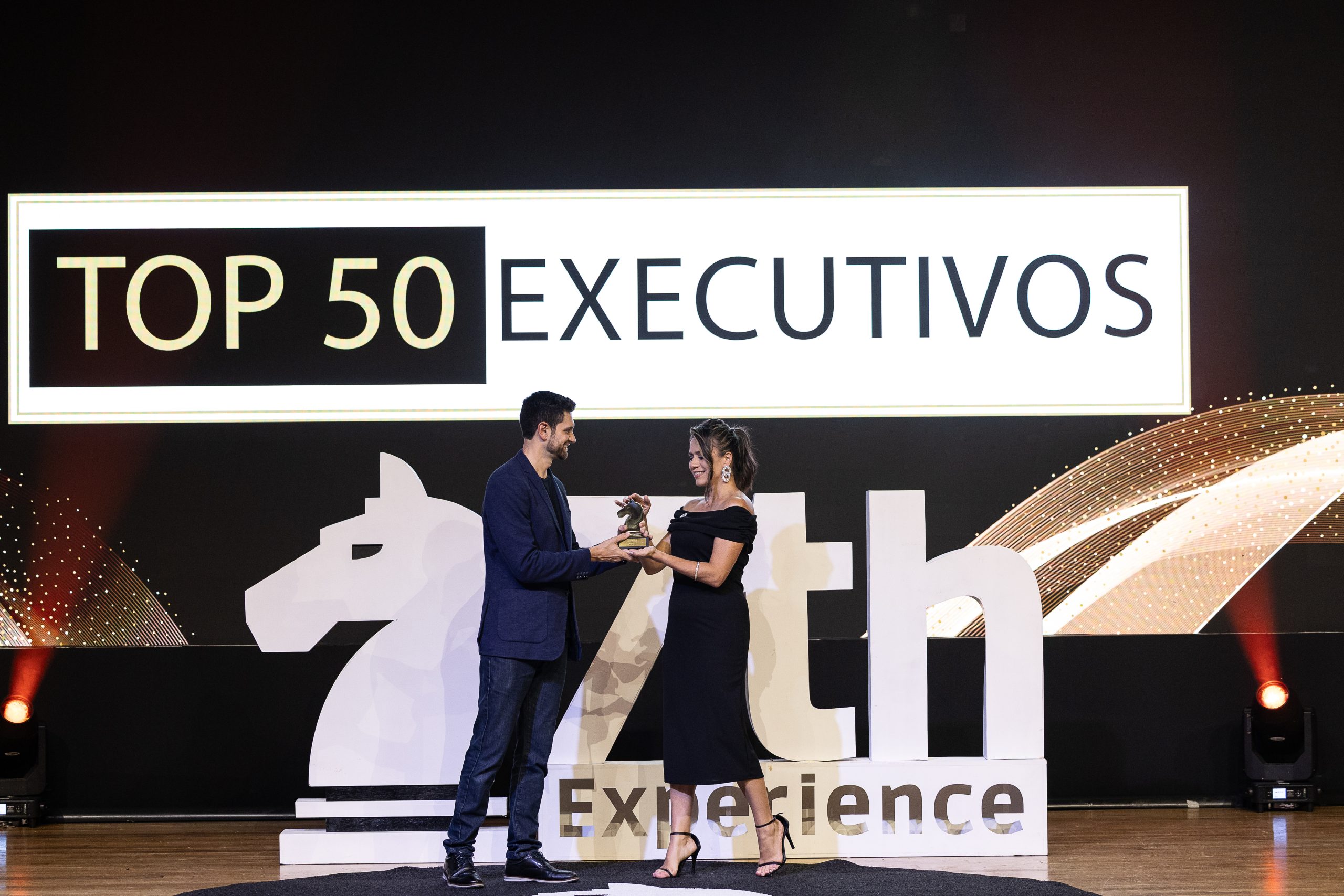
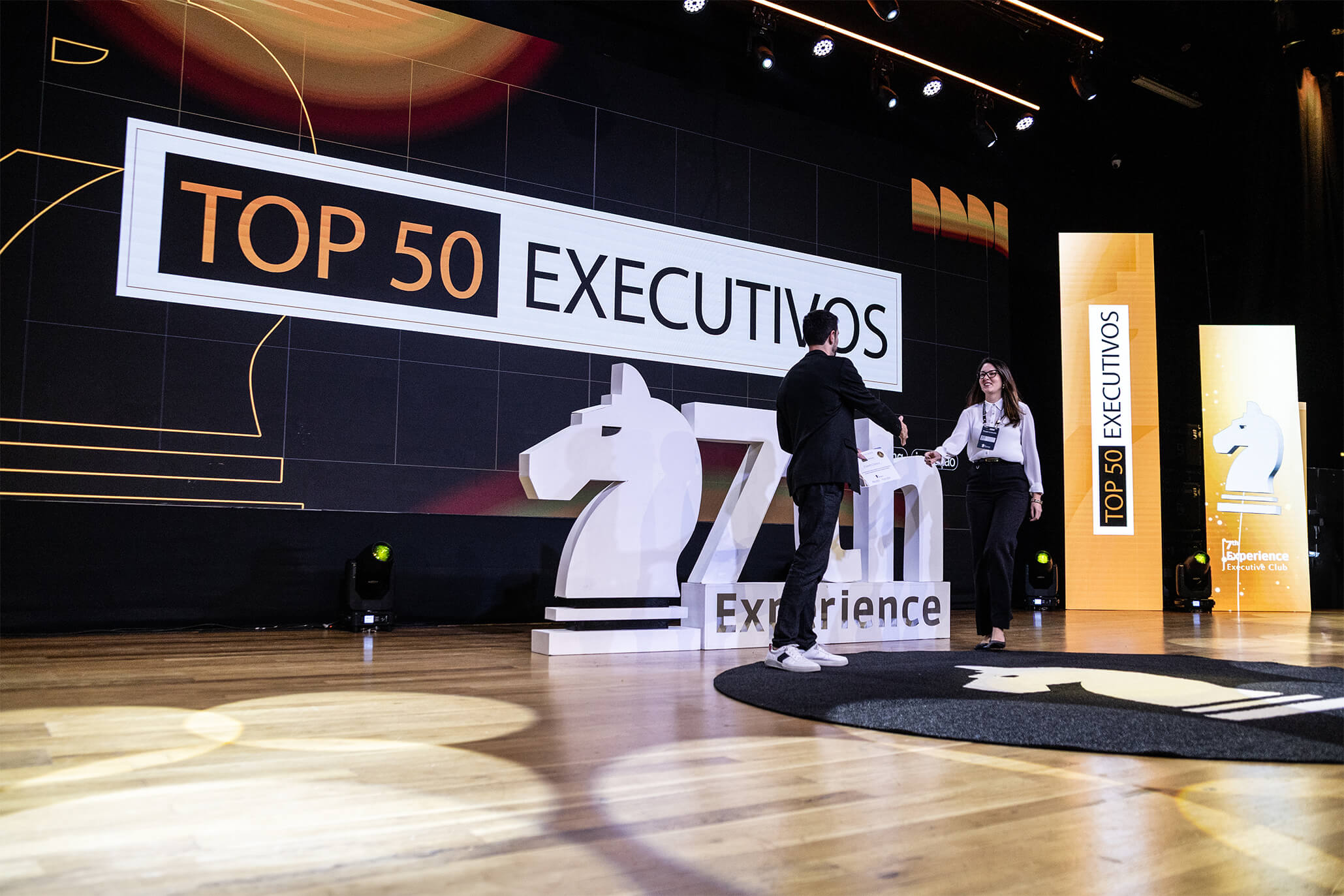
Applications closed on July 10th. The selected candidates will be honored during the TOP 50 Ceremony.

Leaders who expand their impact within organizations evolve and drive strategies that generate exponential growth.

Executives who keep up with consumer changes and lead transformations, shaping trends and influencing strategic decisions.
Professionals who translate strategies into results, such as revenue growth, process optimization, higher conversion rates, and increased customer loyalty.
Executives who build high-performing teams and prepare the next generation of professionals for a digital and data-driven environment.
Leaders who challenge the conventional, test new approaches, explore automation, personalization, and new acquisition and retention models.


He accomplished in 90 days what usually takes a year: the organizational segregation of two companies, with independent corporate areas for two CEOs and a redesigned executive compensation model. Managing people in an environment of maximum uncertainty, with deadlines and consequences — the kind of case that separates executor from strategist.
She leads the People strategy for the Brazilian operation of one of the world's largest credit bureaus, connecting culture, talent development, and organizational transformation in a business driven by data and analytical intelligence. She is recognized for keeping people management in step with the evolution of the business, strengthening a culture of high performance, innovation, and growth.
Led the transformation of the People and Culture area, integrating innovation, governance, and organizational development to strengthen business results. Strategically expanded its scope by incorporating Legal, Operational Training, and Quality, in addition to structuring the company's succession program. In its first AI initiative applied to people management, it implemented intelligent interviews and automation in a pilot program that reduced turnover by 29%.
Instead of waiting for the tool to be created, they built their own: an AI-powered HR management system with automation that unifies data and indicators from over 200 employees, an audit of hiring processes integrated with the Internal Revenue Service, and a proprietary methodology for performance evaluation and leadership calibration. This is the portrait of RH Builder—a rare example of technical leadership in any size company.
Strategic HR proved its worth in hours and days, not in adjectives: automation and digitalization of onboarding freed up more than 120 hours per month for the team and the hiring time dropped from 25 to 18 days, with increased female representation. Efficiency measured with precision — in one of the most respected law firms in the country.
The executive played a key role in developing a strong culture within a new company, created as a spin-off, which became the world's largest ice cream company. She led the preparation of leaders for change and the implementation of the new organization's identity, with a global recognition program. Establishing a new culture from scratch on a global scale is a rare opportunity, and she embraced the challenge.
They applied a method where most apply intention: SOMOS BIC reviewed 61 core HR processes, prioritized 18 initiatives by impact and effort, redesigned onboarding, and incorporated a people cost simulator to give real autonomy and accountability to leaders and teams. People governance with data, employee experience, and business vision behind it — a rare discipline, duly recognized.
Responsible for connecting Electrolux's global strategy to Latin American priorities, translating culture, leadership, and talent management into organizational capabilities that accelerate business transformation. Recognized for the ability to transform strategic guidelines into consistent execution, aligning regional leadership with the company's global agenda.
It was surgically precise where the business is decided: by mapping the capabilities of the mission that concentrates 80% of the company's financial and human impact — the store management integrating selection, succession, and development based on them. A talent strategy anchored at the exact point of greatest leverage: the precision that placed it among the highlights of the year.
It democratized AI instead of restricting it to the committee: the IAlper program empowered employees and culminated in a hackathon at Google headquarters; AI entered the evaluation cycle of over a thousand people, supporting feedback and Individual Development Plans (IDPs); and the Digital Clinic united physical and digital health at headquarters. Technology and human care on the same agenda—with real buy-in.
It implemented AI across four areas of the employee journey — predictive selection, conversational onboarding, sentiment analysis-based listening, and automated reading of medical certificates feeding real-time dashboards. One of the most comprehensive AI adoptions in HR in Brazilian retail: the tactical aspect is removed from the table, and people-driven decisions are made with data. That's why it's on the list.
It operates on a retail scale with few parallels in the South: the modernization of recruitment supported more than 10,000 new hires in 2024 with a decrease in the time to fill vacancies, and the Loja Escola program structured a development path for more than a thousand leaders. An attraction and training machine running at volume — and under control.
He led the People division in one of the most complex corporate restructurings in recent Brazilian industry: the organizational redesign that accompanied the shareholding change of the largest petrochemical company in the Americas, reorganizing global structures in pursuit of synergy and greater efficiency. He leads the HRBP team globally, present in all locations – South America, the United States, Europe, and Asia.
He makes Brazil a reference point on the global stage. With a multidisciplinary team, he conceived the Learning Lab, an initiative that mobilizes more than 40 strategic themes, achieves 90% engagement, and was expanded to Mexico due to its impact. He led a career path that brings clarity, transparency, and growth opportunities in all specialties—Brazilian leadership transforming local ideas into solutions that cross borders.
It reversed the logic of corporate health: instead of waiting for problems to arise, the HR leadership follows up with each employee through human interaction, focusing on prevention and managing care. The plan's claims ratio dropped from almost 100% to 59% — one of the most significant financial results of the year in healthcare. Prevention that shows up in the bottom line and in the presence of people.
It contributed to consolidating an advanced approach to people analytics at Sicredi, with a model capable of anticipating turnover with 86% accuracy and guiding preventive retention actions. This initiative is complemented by Theo, an assistant that brings strategic data to the daily routines of leadership. Its recognition among the Top 50 HR professionals highlights its ability to transform data into decisions with real impact for people and the business.
Danielle Lopes, Director of People & Transformation at Livelo, leads one of the most established age-affirmative action programs in the country, Expert 50+. Created in 2021, the program is in its 6th edition and has accumulated more than 7,000 applications. Currently, 45% of the company's professionals over 50 years old joined through the initiative, working in technical areas such as digital products and controllership. Proven inclusion in recurring hiring and innovation in projects, not in discourse — the trademark that brought her to the list.
A pioneer in longevity in Paraná's retail sector: it earned the international Age Friendly certification by consolidating practices that value professionals aged 50+, alongside Jacomar University and a structured onboarding process that provides cultural security from day one. Selected for proving that generational diversity fits—and thrives—on the shop floor.
It turned care into a physical structure, not just talk: the new Health and Wellness Center it inaugurated in Três Lagoas integrates consulting rooms, infirmaries, emergency services, and breastfeeding support into the routine of industrial operations, adding to award-winning prevention programs. One of the most concrete cases of the year in worker health — care installed inside the factory, where it needs to exist.
He led the HR strategy for 16 countries in Latin America, overseeing the integration of an acquired company, the organizational redesign of the region, the simplification of structures, and the development of digital capabilities focused on Artificial Intelligence. Even during this process, the region achieved AkzoNobel's best global engagement result and the lowest voluntary turnover rate in its history.
In Latin America, he spearheaded the human dimension of the company's most profound organizational redesign: the consolidation of Bayer's new operational model, with fewer layers, leaders acting as coaches, and decisions in the hands of those closest to the customer. This was a large-scale change, first applied to HR itself, which reinvented itself in a more flexible, lean structure closer to the business. This consistency justifies his selection among the outstanding performers.
A leader in HR services on a regional scale: spearheaded the redesign of the Shared Services model for Latin America, with standardization, simplification, and management through business-connected indicators, sustainably increasing efficiency and quality. Now redesigning the HRBP model with AI — always one step ahead of the function itself.
Leading the human resources agenda of one of the world's largest pharmaceutical companies, he sustains structured leadership, succession, and culture programs within a highly complex scientific and regulatory operation. He was selected for the solidity with which he connects the local pipeline to the global strategy—the kind of management that doesn't make headlines but sustains growth for decades.
He led the transformation of one of Brazil's largest recruitment operations through the strategic application of artificial intelligence, proprietary assessment models, and a conversational hiring journey. This initiative significantly reduced the hiring SLA and consolidated a more scalable, intelligent, and candidate-centric model, in which technology enhances human decision-making.
He transformed HR into the gateway for AI in the business: structuring journeys that prepare leaders to make decisions with artificial intelligence and creating agents that accelerate competitive people analysis, connecting it to financial and operational results. He turned this agenda into a business, an intelligence hub with its own goals and reporting to the CEO. A CHRO where people management and technology become one and the same.
A Brazilian woman making decisions at the heart of the company: promoted and relocated to the United States, she currently leads HR at Elanco's largest manufacturing plant in that country, also holding global responsibility as HRBP for core Manufacturing and Quality functions. She implemented critical role governance, with over 98% of key positions filled under continuous monitoring, and led initiatives that resulted in an increase in engagement rates of over 10%. This trajectory demonstrates Brazilian HR talent occupying the global stage.
He transformed HR into a key player in business strategy and execution, with regional people hubs that brought recruitment, onboarding, and development closer to retail operations. He prepared people and cultures for IPO and turnaround processes. Author of "People Management Focused on Results," he advocates balancing effectiveness and emotional connection. He created inclusion programs for people in vulnerable social situations, uniting results, people, and impact.
He made changes that employees feel in their schedules: a 5x2 work schedule with a time bank, achieved a reduced administrative work week from 44 to 40 hours, and implemented evaluations with structured feedback. With CDU, he is revolutionizing corporate education in the pharmaceutical retail sector. Quality of life delivered during work hours, not on a bulletin board — a concrete result.
In a multidisciplinary approach, the company innovated where innovation can save lives: using railway operation simulators in the training of MRS train drivers, bringing the training closer to the real risks of the tracks. Corporate education contributed to a 61.4% reduction in operational indicators and incidents after training—one of the rare Brazilian cases where corporate education delivers results in safety and operational development, a direct reason for its selection among the year's highlights.
A benchmark in listening that translates into action: in the operation of 11,000 employees and 650 stores that it leads, the structured listening journey sustains an NPS above 80, the selection process closes hires in one day, there were 1,500 promotions in 2025 — and those who go through the structured onboarding sell about 30% more. People management proven in business numbers, from start to finish.
He brought to the labor judiciary development practices that the market usually reserves for the private sector: structured training and performance management programs within the 11th Regional Labor Court. Innovating in human resources in the public sector is more difficult and rarer—which is precisely why the curatorial team included him among the highlights of the year.
It unified what retail usually fragments: development, succession, culture, communication, and change management under a single Integrated Talent Experience agenda. The evolution of succession strengthens a common culture across different brands, connecting leadership and consolidating a single vision for the largest food retail operation in the country.
It elevated succession planning from an annual ritual to a strategic priority: it created a dedicated Career and Succession area, built a proprietary talent matrix focused on future potential and readiness, and connected leadership development to the execution of the business plan. Succession was treated as an agenda item for the Executive Committee.
It is part of the group that is rebuilding one of the most traditional retail networks based on culture: the "I Solve It in One Day" initiative has become the guiding thread of the turnaround, translating the reorganization of structures and indicators into simple and proactive behavior. It was selected for leading the recovery by putting people first—at a time when it would have been easier to leave them for last.
She leads one of the most comprehensive HR departments in Brazil: people, management, and sustainability integrated within one of the country's largest food companies, headquartered in the Northeast, with over 16,000 employees and operations throughout Brazil, as well as a unit in Uruguay. She was selected for her consistent approach to talent and the ESG agenda as a single long-term commitment.
It proved its success in real-world structural changes: in the commercial expansion of one of the largest national pharmaceutical companies, the increase from 5 to 12 executive management positions was filled 100% by internal talent, with a plan that ensured continuity during full acceleration. A pipeline that works when tested—the evidence that brought it to the list.
She globally leads one of the world's largest youth employability initiatives: the Youth Initiative, which in Brazil alone has reached more than 620,000 people aged 18 to 29 in the last five years, connecting training and employment opportunities. A woman at the forefront of the global talent agenda—a scale and reach that easily placed her among the highlights of this edition.
She leads one of the most challenging people-related agendas in the country: diversity, health, and safety at an industrial operation in the Amazon, connecting the specificities of the territory to the organization's global strategy. She was selected for proving that the social agenda is part of the business—in a context where every advance in inclusion and safety has real weight.
We led initiatives that transformed talent management in Supply Chain in Latin America: we created the Supply Academy, structuring development and career paths; we implemented the 30/60/90 onboarding portal in three countries, ensuring consistent integration; and we strengthened the succession pipeline for key positions, increasing organizational readiness and female representation in leadership.
He transformed guidelines into behavior: the cultural empowerment he led stemmed from a broad diagnosis with leaders and employees, reviewed competencies, evaluation, and management rituals, and the "Generation Tiger" campaign translated the culture into daily practice. In one of the strongest brands in the national industry, culture with structure and measure—not just a poster.
She created one of the most comprehensive affirmative action programs on the market: Black Women in Technology combines affirmative action recruitment, data and AI training, executive mentoring, and mental health support. In three months, more than 500 women enrolled, with a 98% retention rate and a 23% increase in representation. She was selected for treating diversity as a talent strategy with clear design and data—not just as a campaign.
It combined leadership development and racial literacy in the same movement: the Modern Leaders program trained 51 leaders in a 102-hour journey with assessment and coaching, and the reverse racial mentoring program placed executives to learn from Black colleagues. A rare combination in the market and the reason for its selection: modern leadership that is built by listening to those who are rarely heard.
It repositioned people analytics from reporting to a decision-making engine on a global scale: the agent connected to the HCM it structured guides talent demand and allocation with a complete view of the staffing cycle, and skill similarity models enhance the use of internal resources. People analytics operating where decisions are made — technical pioneering with a Brazilian signature.
A background in Law, a career in HR, and a governance perspective have yielded concrete results: a new talent acquisition architecture with 48-hour onboarding supporting double-digit growth; Codificadas consolidating Brazil as a hub for training women in technology in Latin America; and ReBegin reintegrating women into the market. During this period, the company entered LinkedIn's Top Companies 2026 and once again reached the podium of Top Employer. Talent as a strategy, with results and purpose.
It united employees and customers in the same strategy: at the forefront of people, sustainability, and transformation in the second-largest pharmacy chain in the country, it supports development, culture, and a social agenda with thousands of people at the forefront. An innovative chair architecture that recognizes that those who care for the customer need to be cared for first.
With the support of AI, I developed a groundbreaking tool for Total Rewards: a dynamic matrix that cross-references performance, salary evolution, and market benchmarks to predictively identify retention opportunities and budget impact. The goal is to act before the termination letter is issued. Created in Brazil, the solution has already generated interest in the US and Canada, reinforcing data-driven decisions and the strategic role of HR.
Active and strategic involvement in the creation of OLX Flow, a program that rethought corporate well-being. Self-funded, it reduced absenteeism by 32%, mental health-related absences by 22%, and claims by 15%. It generated R$ 5.5 million in avoided costs, 87% satisfaction, and 3 market awards, including Best Mental Health Project in Brazil 2025 (Vittude). It proved that health is a result, consolidating its leading role among the highlights of the year.
It proved its people management style with a results-oriented discipline: it increased engagement from 75 to 93, maintains an internal NPS of 66, and led the redesign of the health plan with significant savings for the operation. Clear, measured, and recurring numbers in a global multinational chemical company, the combination of rigor and care that brought it to the TOP 50 of the year.
He led one of the most complex crisis management efforts of the year. When the tariff hike abruptly reduced the company's revenue by 80%, he led a company restructuring that included dignified layoffs, structured a layoff program with income supplementation, and, in just 60 days, enabled a new operation in another country, with the expatriation of more than 80 professionals, from operators to leaders. This performance reinforces the strategic role of HR: protecting people, sustaining the business, and leading difficult decisions responsibly.